Hafnium starts in the same mineral as zirconium - and separating the two is extraordinarily difficult. But once isolated and purified, hafnium becomes a remarkable material in its own right, bringing unique thermal, chemical and nuclear properties to some of the world’s most advanced technologies.
ATI combines specialized chemical separation with high-purity refining and downstream materials expertise to produce hafnium at production scale for semiconductors, aerospace, defense, space and other demanding applications.
One Element. Remarkably Different Jobs.
Hafnium is unusual because very small amounts can have an outsized effect. Depending on its form and application, it can enable microscopic semiconductor features, strengthen high-temperature refractory alloys or interact strongly with neutrons in nuclear environments.
Built for Extreme Heat
Hafnium brings exceptional high-temperature capability to demanding material systems. Its extremely high melting point and ability to strengthen refractory alloys make it valuable in propulsion and other applications where conventional materials reach their thermal limits.
A Powerful Alloying Element
A little hafnium can change a lot. Carefully controlled additions of hafnium can improve the high-temperature strength, stability and environmental performance of advanced nickel and refractory alloys.
Performance at the Atomic Scale
Hafnium also performs where dimensions are measured in nanometers. Ultra-high-purity hafnium compounds enable thin-film applications in advanced semiconductor manufacturing, where chemistry and consistency have to be controlled at extraordinary levels.
Nature Put Zirconium and Hafnium Together. We Learned How to Separate Them.
Zirconium and hafnium behave so similarly chemically that separating them at industrial scale requires highly specialized processing. ATI has spent decades mastering that chemistry - then taking hafnium beyond separation through purification, metal production and engineered material forms.
Separation Is the Science
ATI's process begins near the raw-material source. Chemical processing separates zirconium and hafnium before further purification and metal production - an unusually upstream capability that gives ATI control before most conventional metals manufacturing even begins.
Purity at Production Scale
Producing high-purity material in a laboratory is one thing. Producing it repeatedly at commercial scale is another. ATI combines chemical separation, purification and process control to achieve hafnium purity levels required by demanding energy, aerospace, defense and semiconductor applications.
From Oxide to Engineered Metal
ATI doesn't stop with hafnium oxide. Our integrated capabilities extend through further chemical processing to hafnium sponge and crystal bar, providing high-purity feedstocks for advanced applications and alloys.
One Process. Two Critical Materials.
Producing nuclear-grade zirconium requires removing hafnium. ATI's ability to master that difficult separation creates two strategically important material streams - ultra-low-hafnium zirconium and high-purity hafnium.
The Hafnium Portfolio
A Rare Position in the Supply Chain: Purity Is Rare. Scale Is Rarer.
Global hafnium production is inherently limited because hafnium isn't typically mined on its own - it emerges through zirconium processing. ATI's integrated zirconium-hafnium operations give us a differentiated position in a constrained global supply chain at a time when demand is expanding across advanced technologies.
Hafnium Oxide
High-purity hafnium oxide provides the starting material for advanced electronic and other applications where extraordinarily precise chemistry is required.
- Semiconductor Materials
- Advanced Electronics
- Specialty Applications
Hafnium Sponge
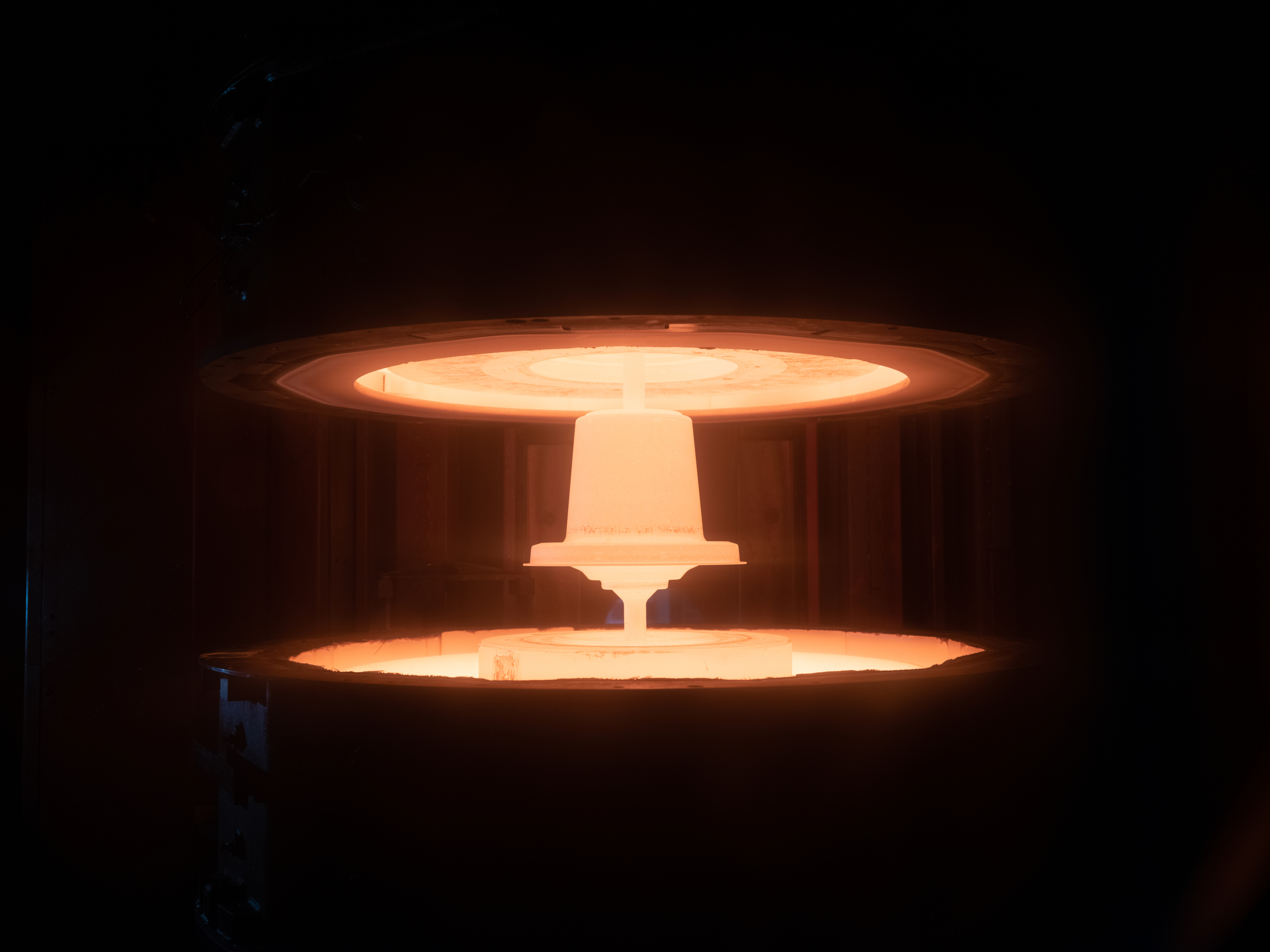
ATI converts purified hafnium through specialized chemical and reduction processes into metal sponge for downstream melting, alloying and advanced material applications. The ATI chemical-operations process includes reduction, vacuum distillation, crushing, blending and analysis to produce certified metal sponge.
- Alloy Production
- Aerospace
- Defense
- Nuclear Applications
Hafnium Crystal Bar
High-purity hafnium metal for demanding applications where chemistry and material consistency are critical.
- Advanced Research
- Electronics
- Specialty Alloying
- High-Purity Applications
Hafnium in Advanced Alloys
Hafnium plays an important role in high-temperature nickel and refractory alloys, including ATI C-103™, where its contribution helps materials maintain performance in demanding propulsion environments.
- Nickel Superalloys
- C-103
- Space Propulsion
- High-Temperature Systems
Powder Superalloys
When conventional cast-and-wrought metallurgy reaches its limits, powder metallurgy opens another performance frontier. ATI produces advanced nickel powders engineered for extremely fine, uniform microstructures and the demanding temperature, fatigue and durability requirements of next-generation engine disks.
- High-Pressure Turbine Disks
- Compressor Disks
- Next-Generation Rotating Components
Where Hafnium Performs
Space
Hafnium helps high-temperature materials perform where propulsion systems generate extraordinary heat.
Heat That Leaves Most Materials Behind.
Rocket and spacecraft propulsion can expose components to temperatures where conventional structural alloys rapidly lose capability. Materials must retain strength and dimensional integrity when performance matters most.
From the Lunar Era to the New Space Race.
Hafnium is an essential alloying element in ATI C-103™, our niobium-hafnium-titanium refractory alloy with a heritage stretching back to the lunar era. Today, C-103 continues to serve high-temperature propulsion applications and is being extended through powder and additive manufacturing.
- Hafnium
- Niobium
- C-103
- Powder
- Additive Manufacturing
- Refractory-Metals Expertise
Aerospace
Hafnium may represent a small fraction of an advanced superalloy's chemistry, but its effect on performance can be significant.
Every Degree Demands More.
Jet-engine materials operate under sustained heat, stress and repeated cycles. As engines push temperatures and efficiency further, alloy chemistry becomes increasingly sophisticated.
Engineered Into the Chemistry.
ATI's position across both hafnium production and advanced nickel metallurgy gives us expertise spanning the element itself and the high-performance alloy systems that use it.
- High-Purity Hafnium
- Nickel Superalloys
- Melt Expertise
- Alloy Development
Defense & Hypersonics
Small Element. Extreme Mission.
Hafnium contributes to refractory and other high-temperature material systems used where speed creates punishing thermal environments.
Speed Becomes Heat.
At hypersonic velocities, extreme aerodynamic heating creates material requirements well beyond those of conventional flight. Thermal protection and propulsion systems need materials engineered around temperature, strength and environmental stability.
Control Starts Upstream.
ATI's vertically integrated capabilities give us control over hafnium from chemical separation and purification into high-temperature material systems - providing a domestic source of a strategically important element as advanced defense requirements grow.
- Hafnium
- Refractory Alloys
- High-Purity Processing
- C-103
- Hypersonic Materials Expertise
Nuclear
The Other Side of the Separation.
Zirconium is valuable in reactor systems because it absorbs very few neutrons. Hafnium does the opposite - it readily absorbs them.
Sometimes You Need to Let Neutrons Pass. Sometimes You Need to Stop Them.
Nuclear systems require precise control over neutron behavior. That makes the dramatically different nuclear properties of zirconium and hafnium useful for very different purposes.
We Separate Both. We Understand Both.
ATI's decades of zirconium-hafnium separation expertise give us unusually deep knowledge of two elements nature puts together but nuclear applications need to use very differently.
- Zirconium-Hafnium Separation
- High-Purity Hafnium
- Nuclear Materials Expertise
Semiconductors
Performance measured in nanometers.
Hafnium enables advanced semiconductor technologies through high-purity compounds used in thin-film applications on increasingly sophisticated microchips.
When Impurities Are Bigger Than the Feature.
As semiconductor structures become increasingly small and complex, tiny variations in material chemistry can affect performance. The hafnium entering these processes therefore has to meet extraordinary purity and consistency requirements.
Purity That Scales.
ATI combines chemical separation and purification expertise to produce high-purity hafnium at commercial scale - connecting primary-metal capability with one of the world's most advanced manufacturing industries.
- Chemical Separation
- High-Purity Hafnium Oxide
- Process Control
- Production Scale
Learn More About Our Materials
Learn more about our materials.
See Hafnium Data Sheets